History of Internal Medicine in Ethiopia
In August 1962, Dr. Lucien Matte, then President of the University, initiated discussions to open a medical school in Ethiopia. The first advisory commission, known as the Rockefeller Commission, included two Americans and one Briton, who recommended:
- Continuing, strengthening, and expanding the Public Health College and Training Centre.
- Prioritizing secondary school graduates interested in health sector studies.
- Developing plans for a medical school within the next decade.
However, eager to expedite the process, the University invited another Rockefeller Commission with experts from Sweden and Britain. This commission recommended the immediate establishment of a medical school with a phased approach to medical education:
- Pre-medical training at the Faculty of Science.
- Pre-clinical training with minimal staff and students.
- Clinical training at the Princess Tsehai Memorial Hospital and Menelik Hospital.
- A one-year rotating internship.
- Postgraduate training.
On March 26, 1963, the University Council approved the establishment of the Faculty of Medicine. The first five students started their clinical training in 1965. By 1974, the teaching hospital moved to the modern Tikur Anbessa Hospital, and the curriculum was revised to meet increasing demands and social changes.
Under Professor Edemariam Tsega’s leadership from 1974, the Department of Internal Medicine initiated the current postgraduate medical education program in April 1979 to meet the healthcare needs and train medical educators.
Objectives of the Postgraduate Program:
- Train physicians to teach medical students, particularly for rural healthcare.
- Train internists in subspecialties for clinical research and advanced healthcare.
- Prepare physicians for referral hospitals to teach, supervise, and provide patient care.
- Train specialists for regional hospitals, providing specialized services and ongoing education for rural physicians.
With strong support from Addis Ababa University and the Ministry of Health, the program has made significant strides, though challenges persist.
Looking Ahead
As we continue our journey, we recognize the importance of addressing our constraints while celebrating our successes. Our department remains a vital hub for nurturing future Ethiopian internists, and we extend our heartfelt thanks to all who have supported us along the way.
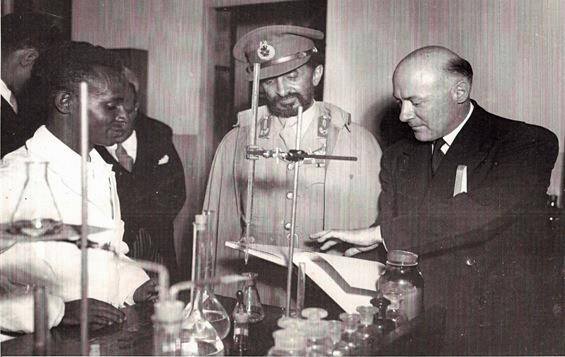
Dr. Lucien Matte, President of University College of Addis Ababa, working in a Biology laboratory with Emperor Haile Selassie. Dr. Matte founded the University College of Addis Ababa in 1954.
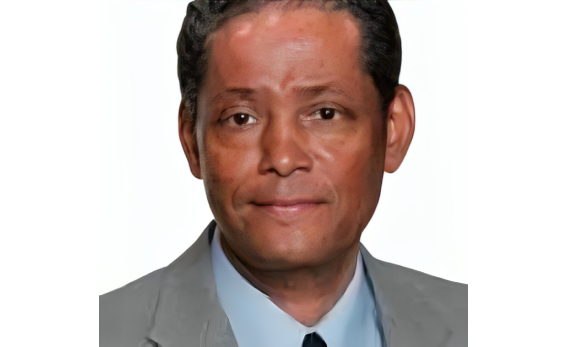
Professor Edemariam Tsega: A Pioneer in Ethiopian Medicine
Professor Edemariam Tsega was a distinguished teacher, clinician, and researcher known globally for his groundbreaking work on liver diseases and viral hepatitis in Ethiopia. Serving at Addis Ababa University from the 1970s to the 1990s, he transformed the Department of Internal Medicine into a leading academic and training center. His contributions to medical education and research have left a lasting legacy in Ethiopia and beyond.